.png) 4 hours ago
11
4 hours ago
11
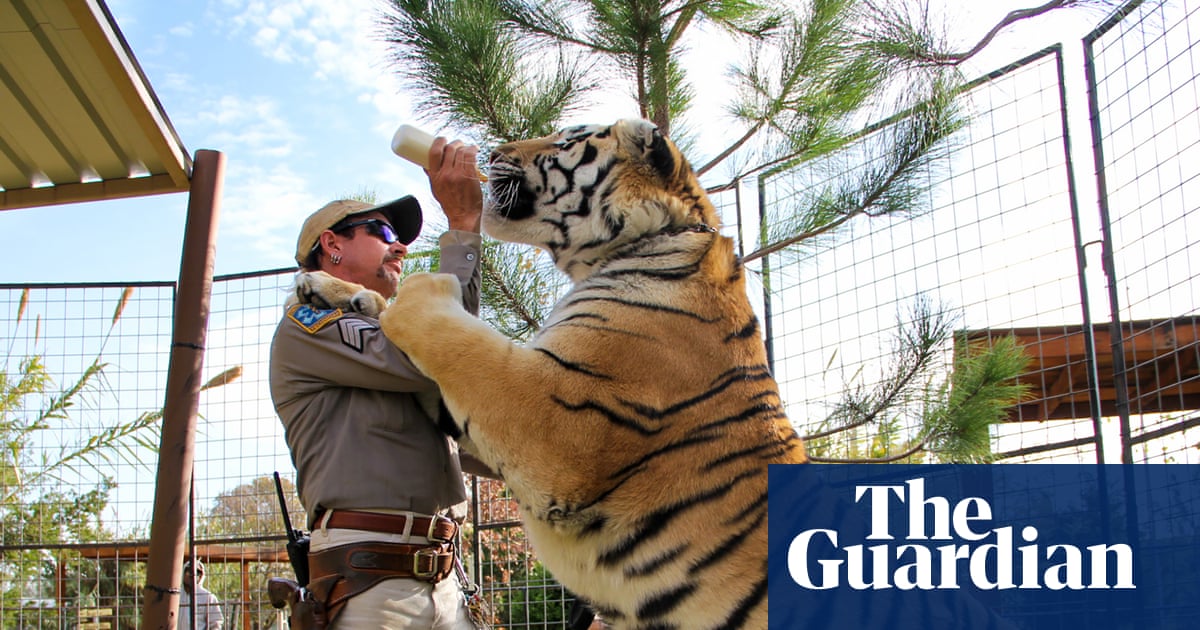
‘We’re not telling this story to impress a tiny crowd of insiders!” There is steely ambition in the eyes of the composer Missy Mazzoli. “Whether you like The Tiger King, Lady Gaga, Poor Things or Cirque de Soleil I’m writing this for you.”
We’re not pitching to HBO at the height of the streaming boom. We’re sipping coffee with librettist Royce Vavrek in the Jonathon Porritt Library at leafy Hawkwood House in Gloucestershire, where maverick impresario John Berry has sent us to work on the structure of an unusual new opera commissioned by his new charity Opera Ventures.
Since Timothée Chalamet whistled away his Oscar prospects by trash-talking the traditional European art forms, the airwaves have been pungent with feisty opera chat. International opera bigwigs have defended their programmes, but there is still a sense that something has to change, and a hunger to find it. Berry has taken the opera world to task for failing to commission storytellers from TV and film and ignoring the social media marketing expertise that might connect it with the new audience it craves. This opera, he tells us will give them the chance to get it right. Thanks for that, John. No pressure there. We drink deep into our coffee.
The Galloping Cure is triggered by the opioid crisis. Seeking to honour friends who have died from addiction, Mazzoli and Vavrek sent Kafka’s story A Country Doctor to the novelist Karen Russell and asked her to respond with a provocation for a new opera.
Russell gave us a story in which a fairground hawker captivates the inhabitants of a depressed industrial town with an exhilarating ride. But once galloping, they can’t stop. Its tone veers from Trainspotting to Sweeney Todd with occasional hints of the madder bits of The Rocky Horror Show. It has vivid characters, sweeping tragic arias and (as of today) a flock of singing sheep and two domesticated dogs. Vavrek, pen in hand, is never more than two scribbles away from a bout of giggles. “You didn’t tell me it was going to be funny,” splutters Berry in the lunchbreak.
Within the world of opera, Mazzoli and Vavrek are superstars. Between them they share a Pulitzer prize (Vavrek, for Angel’s Bone), three Grammy nominations (all Mazzoli) and a rare Met world premiere (Lincoln in the Bardo) later this year. What they say about the future of opera counts. But what is the root of the problem that all these fizzing opera folk are trying to address?
Sitting at the piano having written the first sketch of a banging tune for the hawker Lucky Mack, Mazzoli tries to explain. “New opera is sometimes boring because we’ve forgotten that our job is to entertain people.” She recalls Anna Nicole, composed by Mark-Anthony Turnage to a libretto by Richard Thomas (Jerry Springer: The Opera) as a rare exception. “One composer who I admired told me it wasn’t really an opera,” she says, her engine revving again. Why? Because it has singable tunes and is based on a story from popular culture?
Is there self-censorship in the opera world? Do writers hold back from tunes, bold stories and jokes for fear of not giving the opera hierarchy what they think it wants? Mazzoli thinks the answer is simpler. “During all my time in the American development system, no one ever told me that my job as a composer was to be a dramatist.”
To the backdrop of Gloucestershire birdsong, a small penny starts to drop. Wagner, Verdi and Puccini all saw themselves as dramatists. Handel and Britten were dramatists. “If you want spectacle, humour, tragedy, opera is the place to find it. But it doesn’t happen by itself,” Mazzoli continues. “We need a theatrical development process applied to opera instead of pretending that the art form is about music in the abstract, and that story and acting don’t matter.”
So my job is to bring a theatrical development process to this new opera.
Six months later I’m in Glasgow with a group of singers looking at the first draft of act two. We’re testing its story and characters just as I would in a workshop for a theatre show. But the boldness of Mazzoli and Vavrek’s writing keeps forcing to me to change route.
Patrick Radden Keefe’s Empire of Pain portrays Arthur Sackler (patriarch of the dynasty who made and marketed OxyContin) as both a salesman and a physician moved to moral outrage at the poor treatment of mentally ill patients. We started out pitting a dedicated country doctor against a diabolic fairground hawker. But the evolving libretto and music bring moments of kindness and doubt to the hawker, making the relationship between doctor and salesman compellingly tangled. It’s as if the characters represent two different sides of Sackler’s personality. As we work I realise the story is compelling because we’re trapped in the middle of it. Some of the houses where the opera will be performed have been funded by the Sacklers. Mazzoli’s story isn’t interested in demonising the villains and declaring victory. As we dig into it, her extraordinary work starts to question the very economic structures within which these injustices and these works of art are produced.
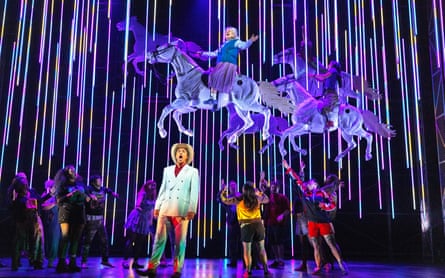
Meanwhile, designer Rebecca Ringst, whose work with Calixto Bieito has put her among the opera’s most cherished enfants terribles, is creating galloping horses which seek to evoke the allure of a “miracle drug”. “If the audience wants to jump into the show and have a ride, I will have done my job,” she says with a twinkle.
There is a bravery and a freedom in this opera process that commercial theatre finds hard to achieve. Tomorrow, at Mazzoli’s request, we are meeting the celebrated Wagnerian soprano Susan Bullock to try out material for a new character, Iwona Kowalksi, an elderly patient whose chronic pain is so excruciating that she would happily give everything she has to be rid of it. In a horrific newly written scene, Lucky Mack will aim to make her dreams come true by inviting her to give her body to science. “Would science want my body?” she asks Lucky. “Science is desperate,” he replies.
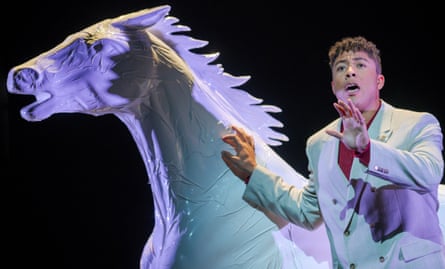
Rehearsals move into the theatre and Ringst’s horses are flying for the first time. Bullock’s husband, Richard, walks into a blood rehearsal (yes, a blood rehearsal) for her big scene in act three. “This is one of the craziest and most wonderful things I have ever seen,” he says and immediately we find ourselves pondering whether her character’s throughline ends in joy or despair.
I find a love letter which I had asked Russell to write from Iwona to her dead husband, explaining how Lucky Mack has changed her life. It expresses the deep longing that sits at the heart of the opera, right alongside Mazzoli and Vavrek’s incandescent fury at the Sacklers and the culture they worked in. The tone is complex and won’t settle until it meets an audience.
“Opera is the most beautiful art form and the most frustrating,” says Mazzoli. “It is at its most beautiful when everything – music, libretto, design and performance are all harnessed together.” And now, as opening night approaches, the thing that excites me most is that its ambiguities can’t be resolved except in the response and discussions it might provoke in its audiences.