.png) 1 month ago
19
1 month ago
19
Exhibition of the week
Frida: The Making of an Icon
The great surrealist and self-explorer Frida Kahlo gets a show that emphasises her influence and posthumous fame.
Tate Modern, London, 25 June to 3 January
Also showing
John Constable
Open air sketches by the passionate, melancholy observer of nature who was one of Britain’s supreme artistic geniuses.
British Museum, London, until 4 October
White Cube at Claydon
Rachel Kneebone, Cerith Wyn Evans, Enrico David and more show amid rococo and Palladian magnificence at this National Trust property.
Claydon Park, Buckinghamshire, until 14 September
The Department of Euterpe
An installation that digs into the fascinating history of Aby Warburg’s art institute.
Warburg Institute, London, until 3 October
Aleksandra Kasuba
Summer’s here and the time is right for experiencing this Lithuanian-American artist’s nature-inspired sculptures and installations at Tate’s seaside venue.
Tate St Ives, until 4 October
Image of the week
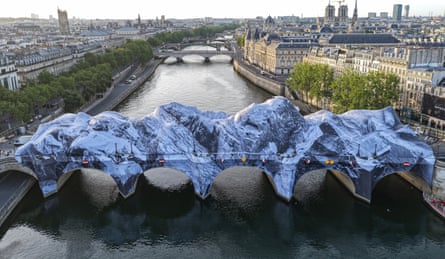
Earlier this week, street artist JR transformed Paris’s oldest bridge into a giant immersive cave-like artwork called La Caverne du Pont Neuf. The installation includes sounds from Thomas Bangalter, one half of Daft Punk, smells of damp earth from an expert perfumer, and is designed to evoke primeval fears of the dark. We spoke to JR to find out why he built it with no light at the end of the tunnel.
What we learned
Gilbert & George have a mystery collaborator
What it’s like to “eat art” during a Frida Kahlo-inspired meal
A new photobook pays tribute to Spain’s ineffectual napkins
Sculptor Nicholas Pope, famous for his gravity-defying works, died aged 77
See Martin Parr’s final commission at Lacock Abbey
In other French news, where to see the best art in Marseille, Aix, Avignon and Arle
Masterpiece of the week
Saint Peter Martyr, Giorgio Schiavone, c. 1456-61
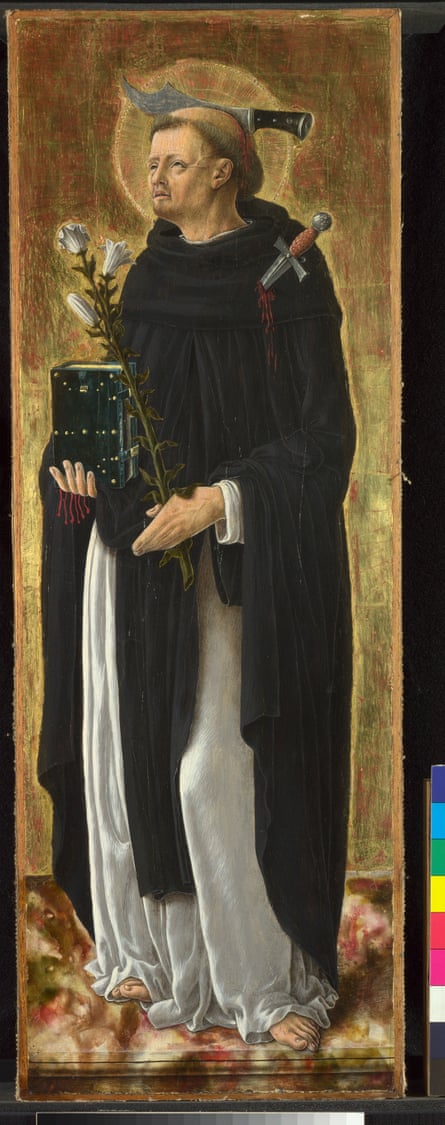
Christian art has a long history of violence. Frida Kahlo (see Exhibition of the Week) was arguably influenced by religious images of martyrdom that were brought to Mexico by the Spanish Empire from the 1500s onwards. However, this painting comes from Italy’s east coast and is the work of an artist from the Balkans whom Italians nicknamed Giorgio Schiavone – “Giorgio the Slav”. His real name was Juraj Ćulinović. Its brutal imagery of suffering has a directness that would echo down the centuries in the art of the Catholic world, intended to harrow, terrify and inspire the flock. Peter Martyr has a savage-looking sword buried in his head and a dagger plunged in his heart. He has been cruelly murdered, yet is alive in eternity, contemplating God. His face expresses pain and suffering: his lips are slightly parted as if muttering his dying words and a vein stands out throbbing through his skin. Schiavone trained in Padua and it is clear from this raw expressiveness that he must have been deeply struck by the sculptures of Donatello, the revolutionary Florentine artist who visited Padua and created an equestrian monument there. It makes you feel for this martyr who was, in reality, an inquisitor sent by the church to punish heretics, who then supposedly murdered him.
National Gallery, London
Sign up to the Art Weekly newsletter
If you don’t already receive our regular roundup of art and design news via email, please sign up here.
Get in Touch
If you have any questions or comments about any of our newsletters please email [email protected]