.png) 2 months ago
64
2 months ago
64
The transformer exploded a few feet from where I was standing. One moment I was on the roof of a restaurant kitchen in Atlanta, cleaning exhaust vents. The next, I was on the ground, my body seizing and burned.
Before that day, music had been the centre of my life. My father was a well-known guitarist in Australia and I grew up watching him play. When I was 14 my parents bought me a drum kit for Christmas. I fell in love immediately. By 22, I was playing in two bands – one metal, one reggae – and preparing to audition for the Atlanta Institute of Music. Then I was electrocuted.
I woke up in hospital. I had fourth-degree burns down my right arm, all the way to the bone marrow. After four weeks in the burns unit, doctors gave me a choice: spend years attempting to save the arm, or amputate and leave hospital within a week. I chose amputation.
It was the right decision but it was still devastating. I had lost my job. I moved back in with my mother and spent day after day watching TV or playing video games with one hand, thinking about everything I might never do again: play the guitar, piano, drums. Even with a standard prosthetic, it felt impossible to imagine holding a drumstick again.
After about a month of this routine, I realised I couldn’t keep living like that. My drums were packed away in my mum’s attic. One afternoon, I dragged them out, set them up on the porch and taped a drumstick to my amputated arm. Playing was incredibly painful, but I could still keep a groove. For the first time since the accident, something shifted.
I started developing my own drumming prosthetic. The first one was crude – mouldable plastic shaped to hold a drumstick, attached to a standard prosthetic with a rubber band. Another, made with springs and bearings, worked well enough for me to start playing with my reggae band again.
About a year after the accident, I had recovered enough to re-enrol at the Atlanta Institute of Music. One of my teachers, Eric Sanders, introduced me to a professor of music technology at nearby Georgia Tech, and together he and I began experimenting with his students, who were building artificially intelligent musical robots. I told them I had an idea for a more advanced version of my prosthetic, which could be enhanced by robotics.
Slowly, prototypes were created: a first version with two drumsticks, one controlled by AI, which is owned by the university, and a second that I play with now.
For the current prosthetic, one of the engineers suggested filming my intact arm in slow motion to study how I strike the drum, and trying to replicate that through sensors and motors. The prosthetic has six electrodes that read the electrical activity in my remaining muscles. When I think about moving my hand, those muscles contract and the prosthetic responds. The accuracy is almost perfect.
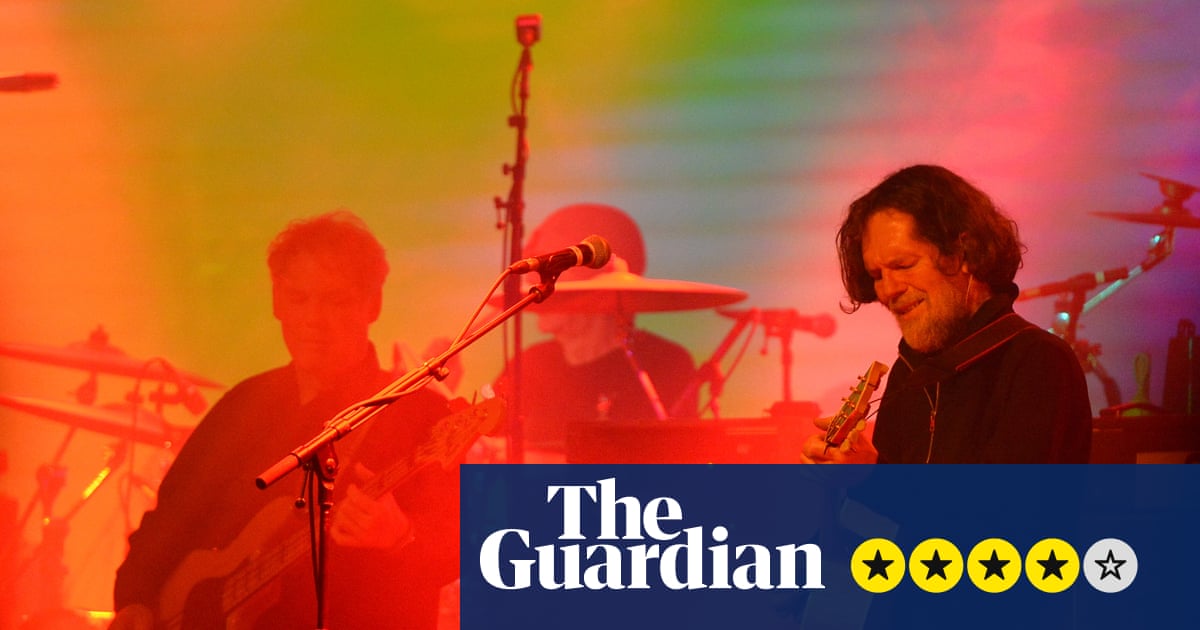
Now, 14 years after the accident, this prosthetic has opened doors I’d never have imagined. I can play timbres and speeds other drummers can’t – up to 20 hits per second. In 2019, I achieved the Guinness World Record for most drum beats per minute using a prosthetic. Technically, it’s the record for most drum beats per minute ever, but that felt misleading – I clearly had an advantage.
The record itself was never the goal. What motivates me now is making these tools cheaper and more accessible. I’ve started a non-profit called Limitless Sound to help develop prosthetics for other disabled musicians.
I remember one of my first shows with my new prosthetic. It was in front of thousands of people in Moscow. I was nervous – I’d never played to a crowd that big – but after the show, many people with disabilities came up to me and told me they’d found the performance inspiring. In that moment I realised this was much bigger than me – this wasn’t just about me getting my life back, it was about showing other people they could do what they wanted, too.
As told to Kate Lloyd
Do you have an experience to share? Email [email protected]