.png) 3 months ago
83
3 months ago
83
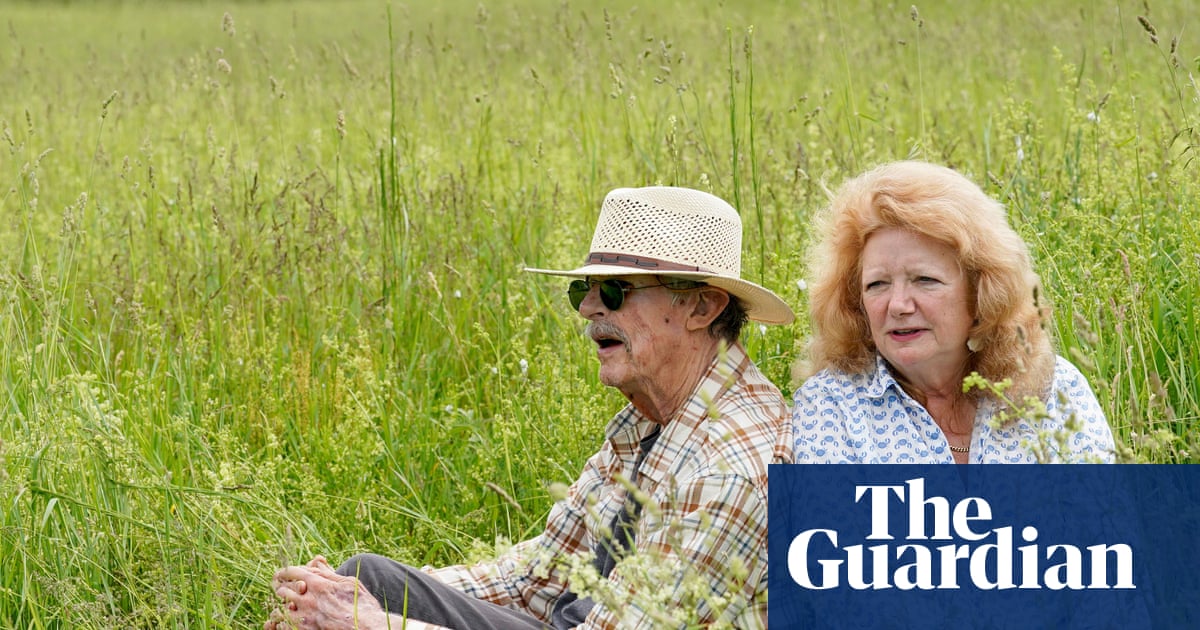
It is a day after Israel killed more than 300 in a ceasefire-defying attack in Lebanon, and five miles from the border, at kibbutz Cabri in northern Israel, the quiet of the early Thursday evening has been disrupted.
Three times, as the Guardian tries to leave, air raid sirens sound, and twice Iron Dome interceptors are launched. The last of the rockets fired by Hezbollah from Lebanon is sufficiently close that the Moria family and their visitors head promptly to a reinforced safe room, shutting a heavy metal door behind them. The family dog is there too, knowing the drill.
A couple of hours earlier, Yael Shavit, one of Cabri’s residents, said the official reaction time had been relaxed “to 30 seconds, up from zero seconds a few days ago”, in the light of the supposed ceasefire. But Orly Moria is less sure: “I don’t think it’s 30 seconds,” she says, cutting in. The reality is that in practical terms the time to respond to an attack from Lebanon remains almost nothing.
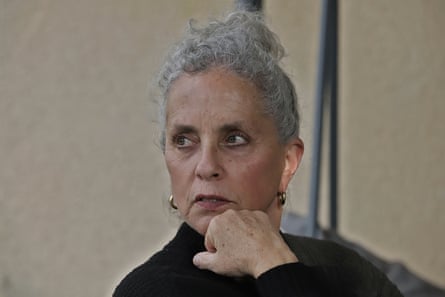
It had been hoped Hezbollah rocket fire might stop after the Iran ceasefire was announced. “This is the first day it is relatively quiet but still everybody is waiting to see,” says another kibbutz resident Amir Yarchi, also speaking before the incoming warnings. Even then the situation appeared fragile. Is it more peaceful on the border now? “Ask us next week,” Yarchi says.
By the time darkness falls a couple of hours later, it is clear that Israel’s continuation of hostilities has meant the Lebanon war has restarted broadly on both sides of the border, if it halted at all. Sirens across northern Israel are back.
The danger in Cabri passes quickly this time. The close geography – the ridge line of hills that marks the border between Israel and Lebanon is visible in clear weather – means that air raid alerts do not last long. Within five minutes it is safe to leave the bunker and there are no reports of casualties or damage.
Rocket fire and drone attacks by Hezbollah into Israel began on 2 March, when the Lebanese proxy group joined the war after the US and Israeli attack on Iran. A total of 1,164 rockets have been fired up to 40km into Israel, a rate of about 30 a day, according to the Alma Center thinktank.
Across northern Israel, the number of civilian casualties caused by Hezbollah rocket and drone strikes has been small. Nuriel Dubin, 27, was killed in a rocket attack on 24 March, though there have also been attacks from Iran, sometimes in coordination. Four died in the city of Haifa this month after an Iranian ballistic missile smashed into an apartment building. The total number of those recorded killed in Lebanon since early March is more than 1,700.
But as the dash to the shelter demonstrates, the war, for Israelis in the north, is constantly disruptive. Residents at Cabri say every decision to leave home, work in the fields, walk a dog, is a matter of “risk management” – in an open space, where there is no shelter, people are supposed to lie down until the danger has passed.
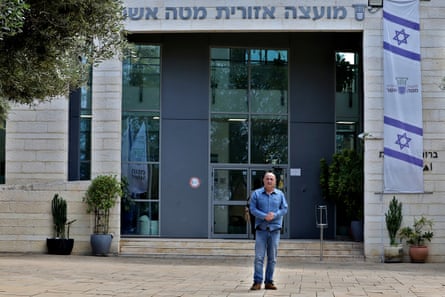
Moshe Davidovich, the chief of the local Mate Asher Regional Council, argues starkly that he is happy for Israel’s war in Lebanon to continue, because it is not acceptable for Hezbollah, “a terrorist organisation for 40 years, to hit us when they want, or when a proxy of Iran wants”. Polling for media outlet Channel 12 reported that 79% of Israelis supported the continued strikes into Lebanon.
It raises the question of how the cycle of violence can be stopped if the mood is to continue bombing. Davidovich calls for international engagement, with support for the Lebanese government from the US, the UK, and France to act as “a big brother in Lebanon, to make sure that Hezbollah will not grow again as a threat”.
Israel, now under pressure from Donald Trump to scale back its offensive against Hezbollah after Wednesday’s mass strikes, has shown a willingness to talk to the Lebanese government directly. But it would take a major political commitment for other countries to become more deeply involved – and already Israel has rejected the idea of France acting as a mediator.
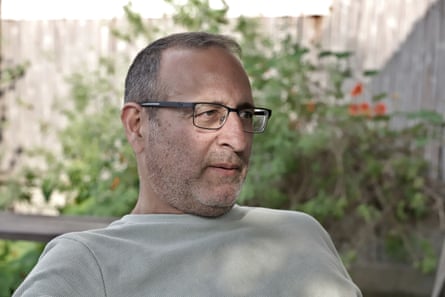
In Cabri, Yarchi argues a military only solution is unrealistic. “We might find ourselves in an endless war in which soldiers are being hit on a daily basis,” he says. Yarchi hopes Benjamin Netanyahu’s government, lagging in the polls, will fall at the next election, due later in the autumn, having launched a series of wars since the Hamas attack on 7 October but failed to resolve Israel’s regional security.
Gali Moria, who now runs the kibbutz’s business activities, was an Israeli soldier during the 1982 invasion of Lebanon that led to a traumatic and ultimately unsuccessful 18 year occupation of the south of the country. In the latest campaign, Israeli soldiers are operating several kilometres inside southern Lebanon, clearing border villages, as well as bombing Hezbollah forces and launch sites.
The veteran argues there should be a winding down of military activity. Israeli soldiers should stay in Lebanon “for the shortest time possible”. A longer occupation would be “risky for the soldiers, bad for the Lebanese” though he also sees some ground for optimism, a view not widely shared among kibbutz members.
“I hope that the weakening of Iran and its support for Hezbollah might have created some dynamics that will reduce the motivation of Hezbollah to attack Israel. I think it’s possible, the best case scenario we can wish for,” he says.