.png) 3 months ago
71
3 months ago
71
Ministers killed the chance to end strikes by resident doctors when they suddenly reduced the amount of money they were offering to secure the peace deal, the doctors’ leader claims.
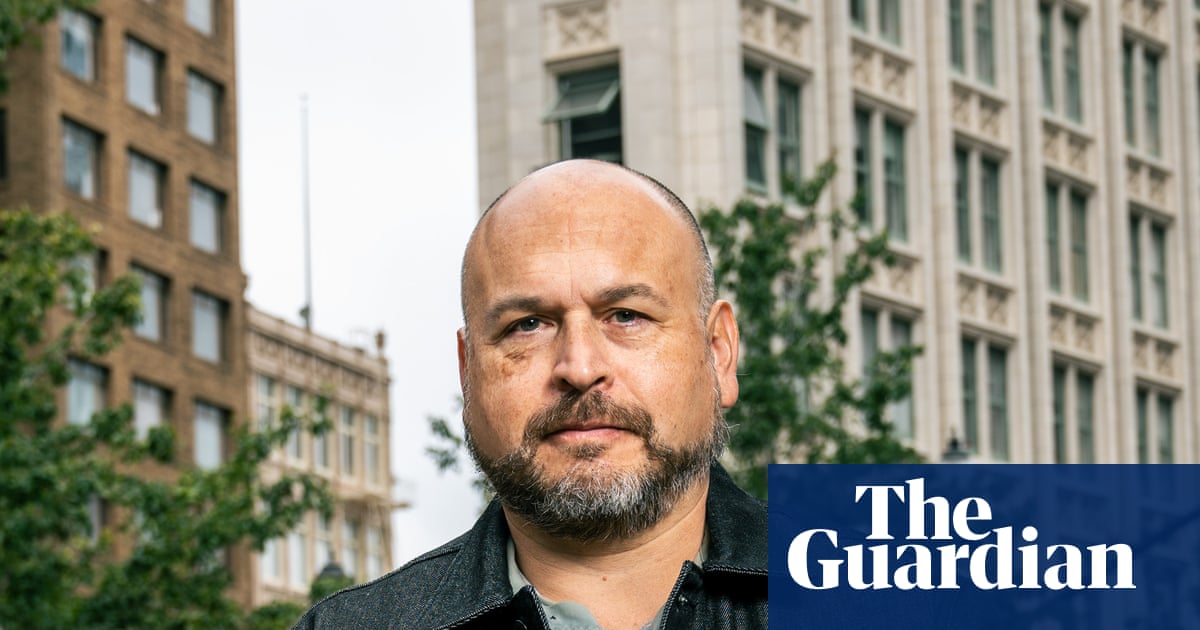
Dr Jack Fletcher accused the government of “playing games” and forcing resident doctors to embark on their 15th strike over pay and jobs, which is disrupting the NHS this week.
Fletcher, the chair of the British Medical Association’s resident doctors’ committee (RDC), said that a last-minute wrangle over money suddenly being taken off the table proved “the breaking point” that scuppered weeks of negotiations that had looked set to resolve their four-year-long dispute.
Fletcher ramped up his war of words with Wes Streeting by alleging that the health secretary had talked “nonsense” about the dispute and damaged public trust in doctors by portraying them as “bad people” and “a huge problem” because of their long-running campaign of industrial action.
In an interview with the Guardian, Fletcher warned that resident – formerly junior – doctors in England would keep on striking until their legal mandate to do so expires in August unless Streeting meets their demands for a 26% pay rise and big increase in specialist medical training places.
He insisted that doctors’ demands are “reasonable”, even though no other group of public sector workers is seeking the same “full pay restoration” as them – the real-terms’ value of their salaries being returned to the level they were at in 2008.
Polling shows public opinion, which favoured junior doctors’ pay claim when they first went on strike over this pay demand in 2023, is now firmly against resident doctors, whose pay has increased by 28.3% over the last three years. Their 15 strikes so far have cost the NHS an estimated £3bn and forced NHS services to rearrange hundreds of thousands of appointments and procedures.
Fletcher believes Streeting only improves what he is offering resident doctors when they strike. He left open the possibility of residents staging a strike every month until August, a scenario that the NHS England boss, Sir Jim Mackey, recently warned may be faced by hospital bosses.
But he also made clear that he wanted to resume talks with the health secretary to try to find a way forward, after the stoppage by resident doctors ends at 7am on Monday morning. NHS trusts have tried to offer 95% of the tests, treatment and appointments they usually provide but have struggled to do so because so many staff have been off on pre-booked Easter holidays. Many hospitals had to cancel hip and knee replacements and other operations.
Fletcher claimed that government negotiators wrecked the real possibility of peace that had emerged after two months of talks in January and February. He said the setback occurred when ministers staged an unexpected last-minute U-turn and reduced the amount of money they were willing to give resident doctors, through reform of the pay progression framework that dictates how fast they earn more as they acquire experience, in an attempt to meet their 26% pay claim.
However, the Department of Health and Social Care (DHSC) challenged Fletcher’s account and said his remarks “misrepresent” what had been discussed during the talks.
The row that led to the BMA abandoning the talks centred on how much additional income resident doctors could expect to receive as a result of “nodal point reform” and how soon. It wanted more cash upfront than the government was prepared to provide.
Fletcher said he and his fellow RDC negotiators had spent “eight weeks talking about a pay progression structure that would potentially work [to end the dispute]”. But, he added: “Then right at the last minute they not only reduced the amount of total investment … they reduced and stretched it … [and said:] ‘Sorry, it has to be [over] three years.’
“Something happened. That’s what triggered industrial action.”
A DHSC spokesperson disputed Fletcher’s account of negotiations, saying: “It is disappointing that the BMA continues to misrepresent what happened during constructive talks conducted entirely in good faith.”
“As the BMA is well aware, the deal – which would have seen resident doctors 35.2% better off, on average, than they were four years ago – was always intended to be a three-year deal.
“It is equally disappointing that rather than presenting any counterproposals the BMA decided to press ahead with strikes this week but the secretary of state has been clear his door is always open.”
Resident doctors were offered £700m in extra pay over the next three years, made up of £150m in 2026/27, £250m in 2027/28 and £300m in 2028/29, it is understood. Until then they had discussed a two-year deal involving more money for each year, Fletcher said.
RDC negotiators were so incensed at what they saw as the government’s breach of what they believed had been agreed that they broke off negotiations and went on strike. “Over two years we were discussing numbers that were bigger than £150m and £200m [for the first two years]. You do not avoid industrial action by playing games like stretching deals to three years,” Fletcher said.
However, the RDC leader praised Streeting for going a long way to meeting the BMA’s concerns about doctors being left without a full-time job in a medical “gig economy” by the government recently passing the Medical Training (Prioritisation) Act emergency legislation. It gives UK-trained doctors priority ahead of their overseas-trained peers in the allocation of the 9,600 places in specialist medical training that are created every year.
It goes a long way to helping the BMA achieve its other main aim, alongside the 26% pay rise, of restoring the “competition ratio” for early career doctors applying for specialist medical training to the 1.8:1 ratio last seen in 2018, before many more foreign medics came to England, he said.
The DHSC said that the law, with its promised creation of up to 4,500 extra training places, should get the competition ratio – doctors’ chances of success – to below 2:1.
But the BMA fears that Streeting’s decision to withdraw his offer of 1,000 more training places this year, which was part of the deal being discussed, means that the ratio will remain higher than they are seeking. That will continue to force doctors who missed out on a training place to accept three, six and 12-month contracts with NHS trusts, he added.