.png) 2 months ago
59
2 months ago
59
The Yangtze River in China, which has been in ecological decline for 70 years, is showing signs of recovery thanks to a sweeping fishing ban.
The ban was made more effective by the implementation of “evolutionary game theory”, which included finding alternative employment for fishers.
One veteran biologist said it was the most positive freshwater conservation story he had seen anywhere in the world in 20 years. “It is really fantastic news. It is one of the first times that we can say that government measures have not just worked, but have really improved things,” said Sébastien Brosse, of the University of Toulouse in France.
Brosse was part of a research team that analysed the changes in the vast waterway, which serves a population of 400 million people and many of the world’s largest factories. After the ban, the team observed fish biomass had more than doubled and several endangered species had rebounded.
Their results, which were published on Thursday in the journal Science, raise hopes of a remarkable – if still fragile – comeback.
The world’s third largest river, stretching nearly 4,000 miles from glaciers in the Tibetan Plateau to its estuary near Shanghai, was the site of one of the world’s most shocking extinction events earlier this century with the demise of the baiji, a freshwater dolphin that was once worshipped as a goddess but was wiped out by pollution, dams, traffic and reckless fishing with electricity and dynamite.
Chinese scientists had long called for a fishing ban on the Yangtze to halt the degradation of habitats and prevent a further decline in fish stocks, which had fallen by 85%, but government restrictions were piecemeal until 2021, when a 10-year ban was put in place by the central government.
It was designed according to the principles of evolutionary game theory, to assess how the three main bodies affected – communities, local governments and central government – would behave depending on different applications of punishments and rewards.
The government spent about $3bn on compensating and finding alternative employment for about 200,000 fishers, scrapping many of the 100,000 boats involved.
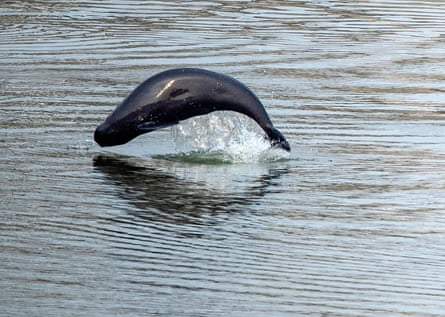
The rapid improvement noted in the study, which compared data from the two years before (2019-2021) with the two years after (2021-23), included a twofold increase in overall biomass and a 13% improvement in diversity. One of the most endangered species, the Yangtze finless porpoise, appeared to have been a major beneficiary with observed numbers rising from 400 to 600, according to Brosse.

The leader of the study, Fangyuan Xiong of the Chinese Academy of Sciences, was upbeat about the findings: “The results reported in this study … provide hope that in an era of global biodiversity decline, ambitious political decisions that support large-scale restoration efforts can help reverse the ecosystem damages of the past and lead to a brighter future.”
Brosse echoed this and urged authorities governing other major waterways in the world – almost all of which are suffering alarming deterioration – to learn from the Yangtze’s example. He said it could be of great use in the management of the Mekong River, which ihas similar problems.
But the authors of the paper and other biologists emphasise the Yangtze and its wildlife remain highly vulnerable to human pressures, which means the authorities must continue to strengthen conservation and enforcement measures. Illegal fishing, particularly in the Gan tributary of the Yangtze, remains a constant threat and requires heightened policing by local authorities. Water quality needs to be improved and some species, such as the critically endangered Chinese sturgeon, need access around giant hydropower plants on the Yangtze to reach spawning grounds.
Overall, however, this looks likely to be taken as evidence that the Chinese government’s efforts to address ecological threats have started to show positive results, after decades of neglect and decline.