.png) 1 month ago
55
1 month ago
55
A Canadian man who intentionally violated a provincial ban on walking in the woods in order to launch a constitutional challenge on the restriction is having his case heard by the province’s supreme court this week.
Jeffrey Evely, a Canadian army veteran who lives in the city of Sydney, Nova Scotia, said that he took a daily hike in the woods in order to manage symptoms of post-traumatic stress disorder he had developed as a soldier, court briefings show.
But his daily stroll was impeded last year when Nova Scotia banned entering the woods in most of the province between early August and mid-September, in an effort to prevent wildfires during a particularly dry period. This included sweeping restrictions on hiking, camping, fishing and using trail systems.
Announcing the ban last year, the Nova Scotia premier, Tim Houston, conceded that it was “inconvenient”, but stressed it was necessary to keep fires at bay and avoid a repeat of the province’s disastrous 2023 wildfire season.
Officials said when they implemented the ban that the fine would match the charge for violating the ban on fires, which was $25,000 (£13,700).
Evely documented his illegal foray into the forest in a YouTube video where he displayed the fine he received for the walk: a hefty $28,872.50, as it included taxes and other additional fees. In the video, he tells officials in advance that he would be entering the woods in order to embark on a court challenge.
The Justice Centre for Constitutional Freedoms, a nonprofit group, is representing Evely in court.
In the applicant brief, Evely’s legal team claims the ban violated section 7 of the Canadian charter of rights and freedoms, which guarantees life, liberty and security of the person. They argue that the ban was vague, overbroad and an overreach of government power.
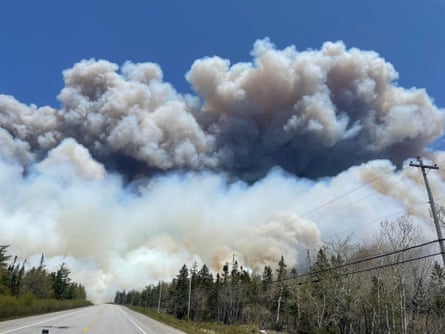
“There are serious legal and constitutional issues with the decision of Nova Scotia to completely ban its citizens from being in more than 75% of the province, ostensibly to protect the woods,” said Marty Moore, a lawyer with the Justice Centre in a media release.
The crown’s brief on the case, as reported on by the Chronicle Herald newspaper in Halifax, argues that the government had to “act fast” because of the heightened risk for fires and no rain in the forecast.
“The proclamation was a reasonable and rational response to a crisis,” it states. The province is arguing that the ban was necessary under section 1 of the charter, which establishes that personal rights and freedoms can be limited by the government within reason based on the interests of the collective.
The case started at the supreme court in Halifax on Tuesday and is expected to be heard for several days.
Paul Daly, a law professor at the University of Ottawa, said the government was likely to have the upper hand in the case in proving the ban was reasonable, because of the significant wildfire risk.
But Evely might have an argument in characterising the woods shutdown as an overstep, particularly if he had strong evidence on his PTSD diagnosis, he said.
“The question, then, is whether there’s a fair balance between the public interest in preventing wildfires and the effect on the challenger,” he said. “If I were a betting man, I would say the government will win this.”