.png) 2 months ago
62
2 months ago
62
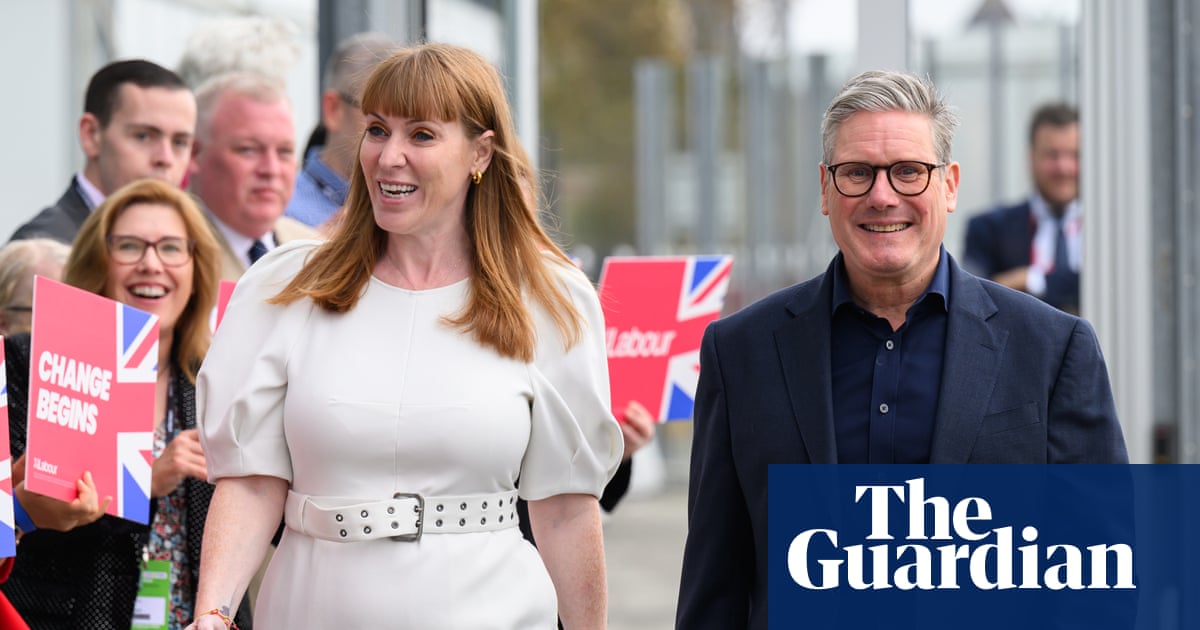
Here is the sort of analysis you’re being served up by our esteemed commentariat. Keir Starmer’s positioning on the Iran war, we are told, reveals a prime minister with no political compass. True, but talk about burying the lede. The story here is not Starmer’s lack of political acumen. British involvement in the Iran war is not a policy question on which reasonable people might disagree, like raising a tax here or spending a bit more money there. This is a grave crime.
Yet all the pressure on Starmer seems to arrive from one direction. He “should have backed America from the very beginning”, declares Tony Blair, apparently eager for a successor to emulate his own record of dragging Britain into US-led catastrophes widely condemned as illegal. Donald Trump’s sidekick Nigel Farage, Tory leader Kemi Badenoch and the rightwing press make much the same complaint.
These conservative “patriots” urged us to “take back control” from Brussels, but demand Britain acts as Trump’s poodle. That this is not only politically permissible but a respectable mainstream position tells a grim story. Despite having dragged this country into one violent catastrophe after another, our political and media elites appear incapable of learning a single lesson.
Let’s spell out what is happening here. A state committing genocide – Israel – has joined forces with an ailing superpower led by an aspiring autocrat. Together they have launched a plainly illegal war, as defined by the UN charter, which prohibits the use of force unless a state faces an actual or imminent attack.
More than 1,000 civilians have been confirmed killed in Iran, according to Human Rights Activists news agency – almost certainly a severe underestimate. That includes 168 people killed in a strike on a school, mostly little girls, which even US investigators reportedly believe the US military was responsible for. Other targets include medical facilities, a water desalination plant, and oil refineries, the latter sparking an environmental catastrophe that has smothered Tehran in black rain and toxic air.
Trump has declared Iran’s map will “probably not” look the same after the war – openly raising the prospect that the country will be dismembered. He has made it clear that he has no interest in democracy in Iran. Iraq seemed a crime with a plan and a strategy. This seems a crime with neither.
Unlike the Iraqi, Afghan and Libyan regimes, Iran can strike back. Oil prices are soaring. The economics professor Jo Michell tells me that the impact on the global economy is “looking close to the worst-case scenario”.
Even taken in isolation, this war should be regarded as both criminal and deranged. But our political and media elites appear to have processed nothing meaningful about Iraq, Afghanistan, Libya or Gaza. These catastrophes might as well have never happened. The failure to have any reckoning – to secure even the faintest accountability – has left our political discourse trapped in a permanent state of amnesia. The consequences of that are fatal.
The impact on our victims should be enough, but alas, there is an ever diminishing pretence that the lives of brown-skinned people matter.
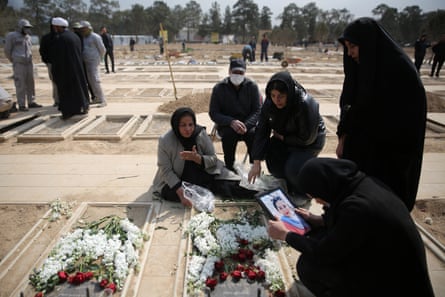
In Iraq: hundreds of thousands slaughtered, a sectarian bloodbath, the rise of Islamic State and now an increasingly authoritarian, corrupt government. Little wonder that when I recently visited Baghdad, residents told me matter-of-factly that their country had been destroyed.
In Afghanistan: two decades of foreign occupation marred by egregious war crimes, culminating in the Taliban returning to power stronger than ever. In Libya: protracted civil war, jihadi insurgencies, and a failed state with two rival governments 15 years after western intervention. In Gaza: an entire land wiped from the earth, with credible estimates now putting the death toll at more than 100,000.
But even if we choose to avert our eyes from the victims, what about the consequences for Britain itself? We are told we must remain subservient to Washington because, as one former Tory cabinet minister puts it: “It is hard to overstate how much our country’s security depends on the United States.” Is that so?
Britain frittered away roughly £47bn in today’s money on the disasters in Iraq, Afghanistan and Libya – money that could have been spent confronting real threats to our security, such as the accelerating climate catastrophe.
We must pay a “blood price” for our special relationship, Tony Blair notoriously declared, in the run-up to the Iraq war. It was not a price paid by him or his children. It was the working-class sons of Wigan, Stoke-on-Trent, Blackpool and Fife whose blood was spilled in Basra and Helmand: 636 British soldiers perished in these disasters.
The Chilcot inquiry found the British government had been explicitly warned that invading Iraq would increase the threat of terrorism. Its supposed anti-radicalisation programme, Prevent, later acknowledged that grievances over UK military operations in Afghanistan had driven support for violent extremism. As the inquiry into the 2017 Manchester Arena bombing found, “the ongoing conflict in Libya” played a key role in the radicalisation of the perpetrator.
The British public have learned their lesson. On the eve of the Afghan war, more than two-thirds of Britons cheered it on. About half backed the invasion of Iraq days before it happened. The country was split over Libya.
Not so this time. YouGov finds that 49% of Britons oppose the war on Iran, with barely a fifth in support.
In other words, backing this illegal war is a fringe position. Ordinary citizens have lived through one disaster after another and drawn the obvious conclusion: each of these wars was ruinous – for the countries attacked, for Britain itself, and for the world as a whole. They understand that launching an even less-planned war, led by a more extreme president against a far more capable enemy, would be sheer madness.
Yet the rational consensus of the British public is marginalised among politicians and media outlets.
If you want to understand the surge of the Green party, you must of course look at the insecurity and hardship produced by a broken economic system. But these foreign policy catastrophes – up to and including Gaza – are part of the story too.
Millions of Britons have concluded that their ruling elites are not the sober, moderate, “grownups in the room”. They have concluded that they are extremists: people who drag their country into one hideous crisis after another and learn nothing from the wreckage. They walk away whistling from the ruins, only to begin agitating for the next bloodbath.
Something has to give. Our establishment, it seems, has become a death cult. Our subservience to the US means repeated slaughters which devastate other societies, destabilise the world, squander our own resources, kill and main our young working-class men and leave us less safe. That our elites remain immune to the common sense of the British public only underlines that they have forfeited their right to rule.
-
Owen Jones is a guardian columnist