.png) 1 month ago
55
1 month ago
55
Last week, UK Music published the Black Music Means Business report, quantifying something many of us have always known instinctively. Over the past three decades, music originating from Black genres has generated £24.5bn of the UK music industry’s £30bn recorded music market.
As the Mobo (music of Black origin) organisation I founded approaches its 30th anniversary this week, I’ve found myself reflecting not just on how far we’ve come, but on how much further we still have to go.
Black music is not a subculture – it is the industry’s engine. And yet it is still not treated that way. This contradiction sits at the heart of British culture. Black music shapes what we listen to, how we speak, how we dress and how we tell stories about ourselves. It has defined Britain’s global cultural identity. But structurally and institutionally, it is still too often treated as marginal – a genre, a niche, something “other”. It is not. Black music is foundational.
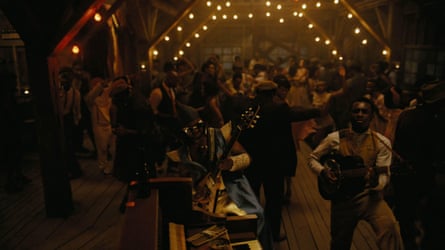
We see this more clearly when we step back. The Oscar-winning film Sinners traces Black music from Delta blues to hip-hop as a continuous thread of expression and resistance. Britain has its own version of that story – from sound system culture and lovers rock to pirate radio, jungle, garage, grime and Afrobeats. But we in the UK have not fully recognised that continuum as part of our national story.
Over the past 30 years, through the work we are doing with the Mobo awards, Mobo UnSung, the Mobo Help Musicians fund and now initiatives like the Mobo Fringe festival and House of Mobo, I’ve seen first-hand how this culture is built – and how often it is overlooked.
When I launched the Mobo awards in 1996, the idea was not welcomed with open arms. It was met with doubt – a lack of investment, a lack of belief and a reluctance to recognise Black music on a national stage. In the end, I remortgaged my home to make it happen.
We had six weeks to deliver a televised awards show. It was a risk in every sense – financial, personal and professional. But the first Mobo awards proved what we already knew: there was an audience, there was a hunger and there was a need. What began as a risk has become one of the most important nights in British music. So why has recognition lagged behind impact?
Part of the answer is historical. Black music in Britain grew out of communities that were themselves marginalised – immigrant communities, working-class communities, communities outside traditional centres of power. The music industry was not built with these voices in mind, so they created their own ecosystems. And when something is built outside the system, the system often struggles to value it.
But there is also a structural reality we must acknowledge. Forms of institutional bias across media, business and the wider cultural economy have shaped how Black creativity is valued. These biases are not always explicit, but they are embedded in who gets funded, who gets platformed and who gets to lead. To fully recognise Black music as central to British culture would require a shift in how we understand national identity – from seeing Black contribution as influential to recognising it as foundational. That shift has not yet fully happened.
There has been progress. We are seeing greater visibility, more conversations and some meaningful changes. But progress is not the same as parity – and it is not happening fast enough.
The Black Music Means Business report offers a roadmap forward, with clear recommendations to address gaps in representation, investment and equity. It is the first step towards creating change – now action is needed.
As the report outlines, that means investing more equitably in Black talent and Black-owned businesses – not just at entry level, but at executive and leadership level. It means recognising that representation behind the scenes is just as important as representation on stage.
The report also highlights the fact that the government has a role to play. Black music must be recognised as a key part of the UK’s cultural economy, with sustained investment in grassroots infrastructure – studios, youth programmes and community spaces where the next generation is nurtured.
Education matters too. The way we teach British music history still does not fully reflect how that history was made. Because Black music did not become integral to British culture because of institutional support. It became integral despite the lack of it. It was built by artists creating something from nothing. By producers experimenting in bedrooms and basements. By DJs broadcasting from tower blocks. By promoters, journalists, managers and community leaders who believed in the culture before anyone else did.
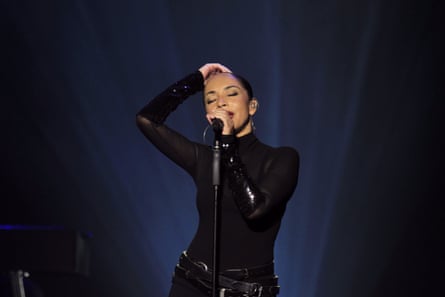
Today’s global stars – Stormzy, Little Simz, Dave, Raye, Central Cee, Skepta and Olivia Dean – stand on the shoulders of those who came before them, from Soul II Soul and Sade to the pioneers of lovers rock, jungle, garage and grime.
We now have the data and the evidence – and we have the lived experience. But what we do next matters. We must invest, educate and renew how we tell our national story. Anything less would be a failure to recognise Britain as it truly is.
-
Kanya King is founder of the Mobo awards
-
The 2026 Mobo awards will be livestreamed on 26 March, at 8pm on the Amazon Music UK Twitch channel. A special Access All Areas highlights programme will air on 27 March on BBC One
-
Do you have an opinion on the issues raised in this article? If you would like to submit a response of up to 300 words by email to be considered for publication in our letters section, please click here.