.png) 3 months ago
69
3 months ago
69
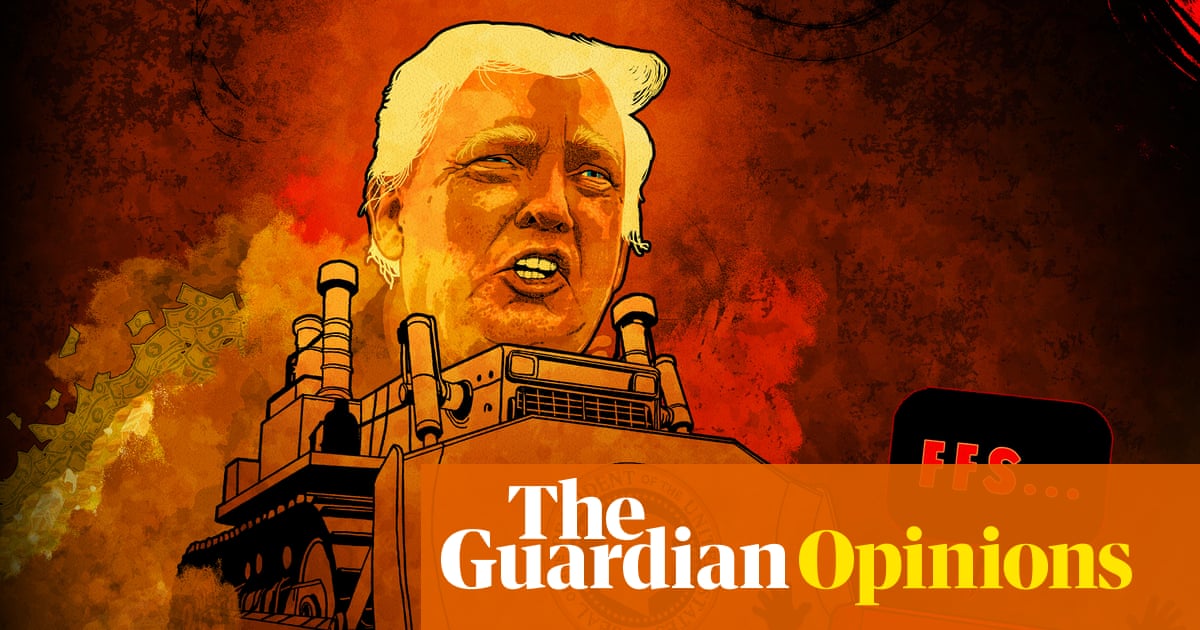
Last year, after the Trump White House cut off access for the Associated Press because the news organization refused to use the name Gulf of America instead of Gulf of Mexico, debate raged about whether his staffers should be welcomed at the annual White House correspondents’ dinner, the US media’s starry annual celebration of press freedom.
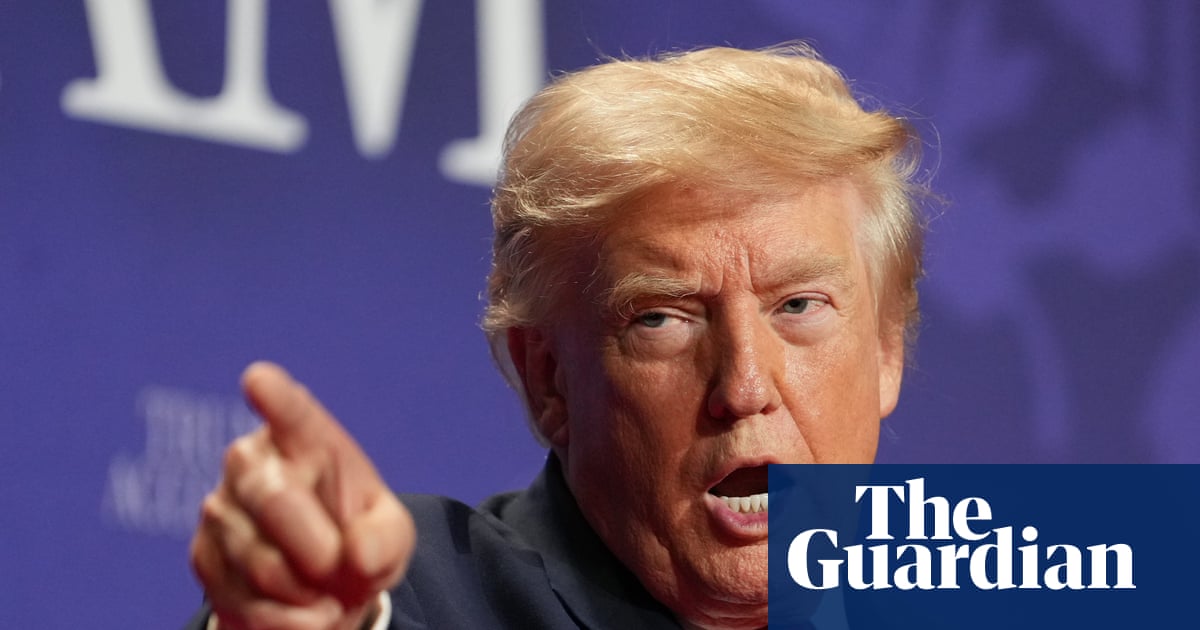
This year, Donald Trump will attend the dinner for the first time as president. Matters have only gotten worse. Over the last 12 months, Trump has referred to a female Bloomberg News reporter as “piggy” and to news coverage of the war in Iran as “almost treasonous”. He has pressed Congress to rescind previously approved funding for public broadcasters NPR and PBS; called for television networks he dislikes to lose their license to broadcast; threatened to jail a reporter (or reporters) if they don’t reveal confidential sources for reporting on the war in Iran; had his lawyer send letters to CNN and the New York Times threatening to sue over their reporting on the US’s June 2025 bombing campaign in Iran; and filed lawsuits against the Wall Street Journal, the Times and the BBC.
Members of his administration have taken things even further. In January, the FBI raided a reporter’s home for the first time in modern history. Just this week, FBI director Kash Patel sued the Atlantic magazine; a few days later, the New York Times published a story alleging that the FBI “began investigating” a Times reporter for “stalking” after she wrote an unflattering article about Patel’s girlfriend. Pete Hegseth, Trump’s media-bashing defense secretary, has compared reporters to the biblical “Pharisees” and accused the press of rooting against the country; his agency has systematically stripped access for defense reporters and mocked networks who lost their workspaces.
“I think it’s gotten worse,” said Frank Sesno, a George Washington University journalism professor who previously served as CNN’s Washington bureau chief. “They’ve gotten more pointed and personal. They’ve ratcheted up the price tag and the legal actions that they are pursuing. We have an FBI raid of a journalist’s home. These are not just norm-shattering, but breathtakingly bold and dangerous moves. And to go to dinner and pretend these things haven’t happened is unthinkable.”
As such, Sesno is among the former journalists who signed a letter – sent to the White House Correspondents’ Association (WHCA) earlier this week – calling on the organizers to “forcefully demonstrate opposition to President Trump’s efforts to trample freedom of the press” during Saturday’s White House correspondents’ dinner, which is organized by the WHCA.
Trump’s presence has already rankled some journalists and pro-press organizations who feel that his anti-media actions should preclude his invitation to a dinner that honors the press – and the US’s first amendment right to free speech – though the event has long been a subject of controversy.
“They have to confront it in some way, and they need to confront it very directly,” Sesno said. “Of all the institutions to stand up to power, the fourth estate has to lead the way, because that’s its job. … They can be very direct without being confrontational.”
During the dinner, the organization’s leadership will talk up the importance of the freedom of the press, as usual, but are unlikely to directly call out Trump, seeing their relationship as primarily about maintaining good working relations with the White House and facilitating access for reporters who cover the administration rather than serving as a watchdog organization. (The organizers of the letter-writing campaign did not reach out to the WHCA ahead of time to discuss their requests, according to a person with knowledge of the situation.)
“The White House Correspondents’ Dinner reinforces the importance of the First Amendment in our democracy,” WHCA chair Weijia Jiang, a CBS News White House correspondent, said in a statement. “As we mark America’s 250th birthday, our choice to gather as journalists, newsmakers and the president in the same room is a reminder of what a free press means to this country and why it must endure. Not for the media or the president, but for the people who depend on it.”
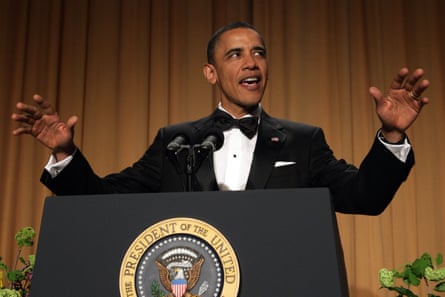
The dinner will be Trump’s first since 2011, when the then reality TV host was roasted by then president Barack Obama. That year’s “nerd prom” was attended by Hollywood stars, including Scarlett Johansson and Jon Hamm. This one is likely to be a less glitzy affair; unlike many previous presidents, Trump has few friends in Hollywood.
It wasn’t always so.
Sam Donaldson, who covered many presidents during his decades at ABC News, recalled that most White House correspondents of the time were fond of former president Ronald Reagan.
“One of the reasons was, he treated us royally, in many ways,” Donaldson, 92, said. “And I don’t mean just: ‘Let’s have a dinner for the reporters,’ but he would call people up in the hospital and wish them well. It was hard to dislike him. It is easy to dislike someone like Donald J Trump.”
But, Donaldson said: “It’s not our place to have a mano a mano fight with presidents. It’s our place to listen to what they say, try to find out what they’re doing that would be in the public interest, present the facts as we can discover them to the public, and not dilute it with our own personal view as to whether this person or that person is telling the facts properly.”
As such, Donaldson said that it was correct for the WHCA to invite Trump to dinner. “Let’s not lower ourselves to his level,” he said.
While Donaldson has spoken out against Trump’s conduct, he views the president’s anti-media screeds as mostly a “tactic” to rile up his supporters.
Peter Baker, the New York Times White House correspondent, who is skipping the dinner – as usual – along with his colleagues, sees Trump’s actions to curtail the press in a more nefarious light. “Every president I’ve covered, they’re all mad at us,” Baker said. “I don’t remember any of them questioning the very foundation of independent media, and he does.”
But in the room on Saturday will be Brendan Carr, the Trump-appointed chair of the Federal Communications Commission who has put legacy television networks on a defensive footing by launching investigations into their programs and empowering local stations to take back control from them.
Carr confirmed that he was not invited to the dinner by either CBS News or parent company Paramount, but declined to say which network had invited him. He said he’s not going for “the rubber chicken”.
“I think it’s important for the country that we have a news media that is trusted and respected,” Carr said. “My hope for the industry is that they find a way to turn things around.”