.png) 1 month ago
64
1 month ago
64
Alexander Kluge, a German film-maker and author who elevated cinematic collages into an art form and won the top prize at the Venice film festival in 1968, has died aged 94, his publisher has announced.
A former assistant of expressionist master Fritz Lang, Kluge was an accomplished director of intellectually rewarding, if at times oblique filmic essays, and an ever-productive writer of short fiction.
He also played a key role in organising the rule-breaking New German Cinema movement that brought forth better-known auteurs such as Rainer Werner Fassbinder and Werner Herzog, and he continued to bring experimental film to the small screen in his later years.
Along with the philosopher Jürgen Habermas, who died earlier this month aged 96, Kluge was one of the last living torchbearers of the Frankfurt school of neo-Marxist cultural criticism.
Born in 1932 in Halberstadt, western Germany, Kluge narrowly survived the bombing of the city by Allied forces on 8 April 1945. After the war he studied law, history and church music at Frankfurt university, where he was mentored by the philosopher Theodor Adorno.
After starting to practise as a lawyer, he was increasingly drawn to literature and film, in 1962 signed the Oberhausen Manifesto which called on the German film industry to break free from shallow tearjerkers and patriotic Heimatfilme.
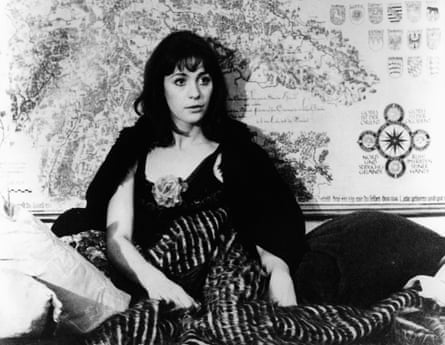
Abschied von Gestern (released as Yesterday Girl in the US) was one of the first films to emerge from the manifesto. The story of a Jewish woman who struggles to settle in West Germany after fleeing from the east, it was told in a jarring style, using discontinuous sound and a non-sequential narrative.
The film won the Silver Lion at the Venice film festival – the first by a German director to do so after the second world war. Kluge shored up his reputation by winning the Golden Lion two years later, with with Artists in the Big Top: Perplexed.
Kluge managed to sustain a rare balancing act, being both a public intellectual and a commercially successful film producer. In 1987, he founded production company DCTP, through which he made a regular stream of arts, magazine and interview programmes for German television.
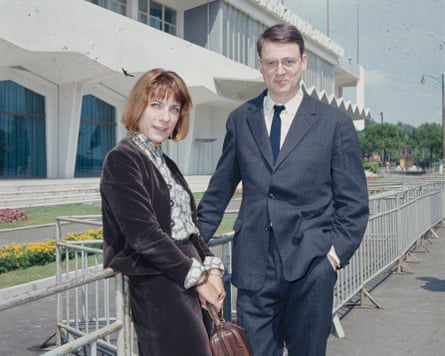
His wartime experience made Kluge a committed pacifist, in ways that came to jar with a new generation of artists and writers in the wake of Russia’s invasion of Ukraine. In a radio interview in 2022, he announced he had been happy to see US troops march into his home town in 1945, and that there was therefore “nothing evil about capitulation if it ends the war”. The interview was met with widespread disbelief for muddling up the historic lessons of an aggressor nation and those of states that had come under German attack.
In 2018, Kluge collaborated with the US author Ben Lerner on a “poetic dialogue” book, The Snows of Venice. “My language is not as beautiful as lyrics,” he told the Paris Review at the time. “This is something that you have to know how to do. Poets are diamond polishers. But there are also collectors of raw diamonds – I am a good archaeologist.”