.png) 2 hours ago
5
2 hours ago
5
Ten years after major demonstrations against the Dakota Access pipeline, tribal leaders and Native American organizers returned to the Standing Rock Sioux reservation this week to honor the movement and its lasting impacts.
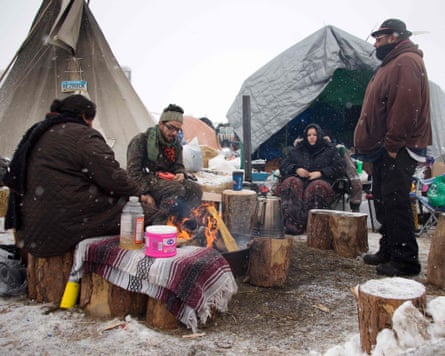
In the rural reservation area of Fort Yates, a four-day encampment that centered on the phrase “mní wičóni” – “water is life” – brought together about 150 tribal members and allies for meals, drum circles, sacred ceremonies and memorials.
It opened with the lighting of a sacred fire – “peta waken” – using coals preserved from a fire that burned at the 2016 camp.
The tradition is a significant spiritual unification between the seven councils of the Oceti Sakowin, or Sioux Nation, tribes, typically done in times of historic and political efforts as a symbol of hope. In November 2016, after nearly two centuries had passed without the ceremony, Sioux tribal elders called for the fire to be relit after protesters – concerned that the Dakota Access pipeline (DAPL), which would run within a mile of tribal lands, might pollute the Standing Rock reservation’s water supply and encroach on Native lands and burial grounds – were maced, attacked by dogs and arrested en masse.
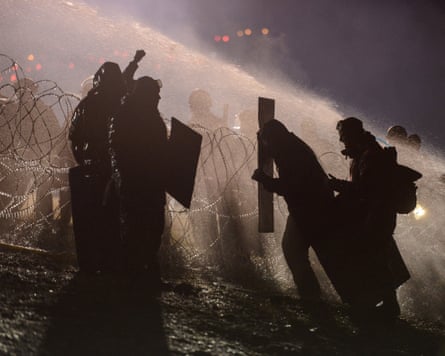
Later that winter, thousands more protesters or “water protectors” convened on the Great Plains, and outrage over the pipeline’s construction became a louder, global movement for Native rights and climate justice. But it did not stop Dallas-based Energy Transfer Partners from building the project, and national guard and police cleared the last holdout of protesters in an early 2017 military-style takeover. The pipeline now transports up to 750,000 barrels of oil a day from North Dakota to an Illinois refinery.
In a powerful moment Thursday evening, Manape LaMere – an original headsman from the 2016 council and a member of the Sioux nation – retrieved the original coals and lit the fire as he had 10 years ago.
One of LaMere’s other responsibilities at the Mni Wiconi gathering was to help perform a spiritual healing ceremony to help those who were at the camps find closure from the trauma of what they experienced.
“When we sacrifice in camp the way we did, all that hardship and all that beauty, I always encourage people to call their spirit back,” LaMere said. “But because we got evicted the way we did, a lot of us may not have received that message, and I’ve seen people struggle.”
Reunion attendees, at open mic sessions or around fire pits, reflected on how the often-violent standoffs between protesters and law enforcement in 2016 left many with lingering trauma, like for Candi Brings Plenty, a member of the Oglala Lakota Sioux nation.
But, Brings Plenty said, while the event left scars, the community formed among camps has created lifelong strength. “I got the best knowledge and woksape, which is a Lakota word for wisdom, being at Standing Rock. I got so much empowerment and even though I got the worst-of-the-worst PTSD and everything that came along with it, you know, I would do it again,” Brings Plenty said.
At the Prairie Knights Casino, the inaugural People of the Sun event brought together renewable energy groups, activists and performers for a three-day summit focusing on clean energy solutions.
Speakers and panelists said that the protests 10 years ago underscored the need for Native reservations to build more sustainable energy systems that align with tribal values.
One group making those systems a reality is the Sage Development Authority, a federally chartered corporation formed by the Standing Rock Sioux nation. The group uses grant funding to build wind farms for tribal district buildings, which allows local leaders to then reinvest that money back into their communities.
Joseph McNeil, the CEO of SAGE and an enrolled member of the Standing Rock Sioux nation, said building infrastructure that allows his community to gain energy independence has intergenerational impacts.
“The intergenerational poverty has been so dire, and being forced and your economy purposely depressed has been so intentional, that we can be voices for that and try to think of ways to help folks who aren’t there,” McNeil said. “We’re putting the stuff onto the district buildings, but it’s up to the district. We’re not going to dictate you, have your own choices, make your own decisions, and then live with those.”
In support of the People of the Sun event was the actor Shailene Woodley, whose arrest at the protest 10 years ago spurred additional public discourse around the pipeline.
“Do your research. Learn about the history, the real history of what happened to this country when our ancestors chose to colonize this land. And not from a place of guilt, not from a place of shame, but from a place of empowerment,” Woodley said in an interview.
“If we don’t pay attention and if we don’t educate ourselves on what happened, then we’re going to continue to even unknowingly repeat those patterns and feed into the same cycles.”