.png) 1 month ago
54
1 month ago
54
In the span of just two days, the most powerful social media company in the world faced a more severe public reckoning than it has in years.
Jurors in California and New Mexico gave back-to-back verdicts this week that for the first time ever found Meta liable for products that inflict harm on young people. For years, lawmakers, parents and advocates have raised red flags over how social media can hurt children, but now the tech firms are being held to account via court rulings that could set long-lasting precedents.
A jury in New Mexico ordered Meta to pay $375m in damages on Tuesday over claims that its products led to child sexual exploitation, among other harms. The following day, a jury in California ordered Meta and YouTube to pay $6m over claims that both companies deliberately designed addictive products to hook young users.
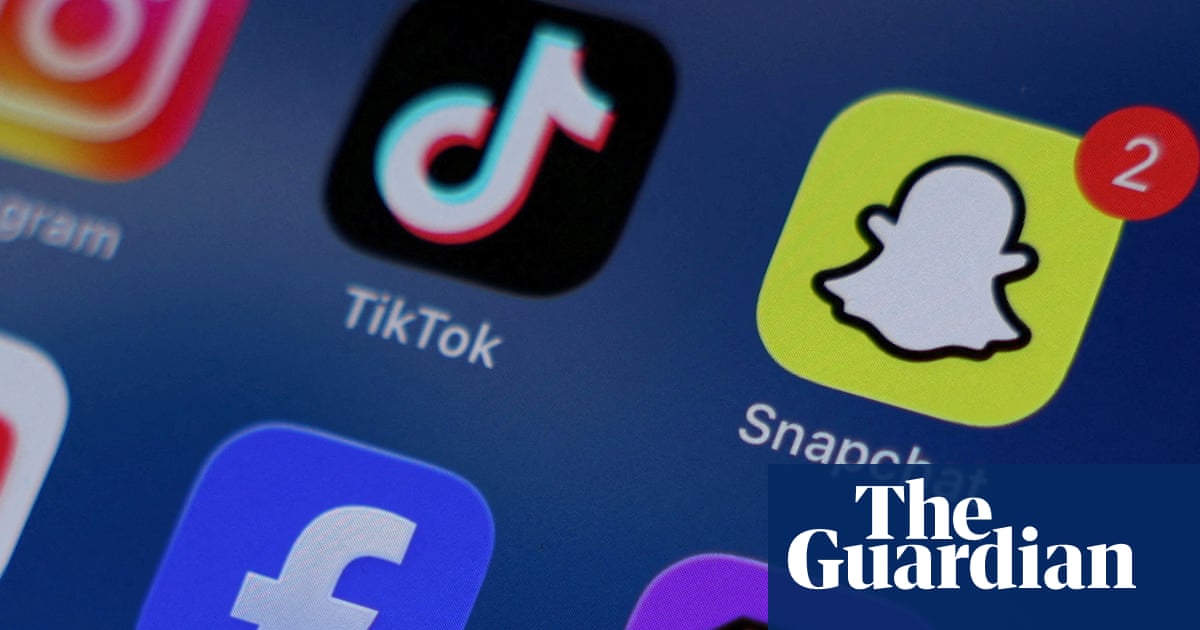
These cases were the first to go to court, and soon will be followed by more trials from two coordinated groups of more than 2,000 plaintiffs, including families, school districts and state attorneys general, who have brought lawsuits against Meta, YouTube, TikTok and Snap.
In a rare rebuke on Wednesday, jurors in the California case found Meta and YouTube acted with malice, oppression and fraud. Their verdict, reached by a 10-2 vote in favor of the plaintiff, signals that public perception of social media and its makers is shifting – now laying blame on the business practices of a multi-trillion-dollar industry that has long operated with minimal regulation and few consequences in the US.
“This verdict is bigger than one case,” the lead plaintiff lawyers for the California case said in a joint statement on Wednesday. “For years, social media companies have profited from targeting children while concealing their addictive and dangerous design features. Today’s verdict is a referendum – from a jury, to an entire industry – that accountability has arrived.”
Meta and YouTube both say they disagree with the verdicts and will appeal. A YouTube spokesperson said the California case “misunderstands” the company, which maintains it is a video streaming platform and “not a social media site”.
For its part, Meta has emphasized the specifics of the case rather than litigate its own public image. A company spokesperson said: “Teen mental health is profoundly complex and cannot be linked to a single app. We will continue to defend ourselves vigorously, as every case is different, and we remain confident in our record of protecting teens online.” The spokesperson also pointed to the California ruling not being unanimous.
James Rubinowitz, a trial attorney and lecturer at the Cardozo School of Law who observed the case but was not involved in the litigation, saw the jury’s decision as firmly in the plaintiff’s camp.
“Ten out of 12 jurors voted for the plaintiff on every single question. That is not a compromise verdict,” Rubinowitz said. “That is a jury that heard six weeks of testimony, sat through 44 hours of deliberation, and reached a resounding conclusion that these platforms were defectively designed and that both companies knew it.”
Flood of suits borrow from familiar playbook
Online safety advocates are focusing on a multi-pronged tactic to challenge tech companies’ practices. They are urging Congress to pass regulation, forming coalitions of parents, teens and advocates who can create attention-grabbing public campaigns and bringing thousands of lawsuits front and center. Mike Proulx, who leads Forrester’s research team, said the tactic appears to be working.
“These verdicts mark an unsurprising breaking point,” Proulx said. “Negative sentiment toward social media has been building for years, and now it’s finally boiled over.”
The goal is to force social media companies to redesign their products and do more to protect children online. In the group of consolidated cases in California, juries can only award damages and not dictate changes to the platforms. Plaintiff lawyers have said that if they bring enough cases and keep winning, eventually it will be simpler for the companies to change their platforms than to keep fighting in court.
The thousands of lawsuits against the social media companies echo those brought against big tobacco companies in the 1990s, which focused on cigarettes’ addictive qualities and their makers’ public denials despite knowledge of their products’ harms. Plaintiff lawyers in both cases alleged some of the features that social media companies built into their platforms, such as an infinitely scrollable feed and video autoplay, are designed to keep people on the apps – thus making the products addictive.
Neama Rahmani, a former federal prosecutor and president of West Coast Trial Lawyers, who was not involved in the litigation, likened the verdicts to what happened with big tobacco, calling the rulings “just the beginning”.
“I’m old enough to remember when we had smoking sections on airplanes, and now, because of litigation, anyone who buys a pack of cigarettes sees cancer warnings all over the packaging,” Rahmani said. Such verdicts “are going to dramatically change the way we view social media apps”.
The California case focused on one plaintiff, a 20-year-old woman who was identified by her initials KGM. She testified that she became addicted to YouTube at six and Instagram at nine, which she said instigated mental health issues. By age 10, she said, she had become depressed and was engaging in self-harm as a result. When she was 13, KGM’s therapist diagnosed her with body dysmorphic disorder and social phobia, which KGM attributes to her use of Instagram and YouTube.
The New Mexico lawsuit was brought by the state’s attorney general, Raúl Torrez, and focused on Meta enabling predators on its platforms, essentially creating an ad-hoc marketplace for child sex trafficking. The state carried out undercover sting operations on Meta’s platform to illustrate how the company failed to stop such exploitation. Torrez’s case also accused Meta of designing its platforms for maximum engagement, leading to addictive behavior in young people.
Jurors heard testimony from company executives, whistleblowers and expert witnesses. But both cases heavily relied on internal documents from the tech firms, which included emails between employees and research commissioned by the companies themselves. The majority of the documents were under seal until the trials commenced. Meta and YouTube’s lawyers had difficulty negating evidence they themselves had produced.
An internal document from YouTube in 2021 read at the Los Angeles trial poses the question, “How are we measuring wellbeing?” and adds the response: “We’re not.” Internal reports from Meta had statements including “the young ones are the best ones” for long-term retention, and that targeting teens is a good “gateway” to entice other family members to join. One email has an employee saying “targetting [sic] 11 year olds feels like tobacco companies a couple decades ago”.
Read to the court in Santa Fe was an email that a member of Meta’s product team sent to Adam Mosseri, the head of Instagram, in 2019, saying: “Data shows that Instagram had become the leading two-sided marketplace for human trafficking.”
KGM’s case was the first of more than 20 “bellwether” cases, which are slated to go to trial over the next couple of years and are used to gauge juries’ reactions and set legal precedent. The fact that jurors sided with KGM is expected to influence trial outcomes in the remaining cases.
For the next phase in the New Mexico lawsuit, beginning in May, Torrez said he was seeking court-mandated changes to Meta’s platforms that “offer stronger protections for children”. Those design feature changes include “enacting effective age verification, removing predators from the platform, and protecting minors from encrypted communications that shield bad actors”.
Plaintiffs lawyers say they are not slowing down their lawsuits, calling the effect of social media on children “one of the landmark issues of the 21st century”.
A separate series of federal lawsuits with hundreds of plaintiffs making similar allegations is slated to start trial in San Francisco in June. The next California bellwether case is scheduled to go to trial in July.
Josh Autry, an attorney with Morgan & Morgan, which was part of the trial team that represented KGM, said he was hopeful their legal strategy is working: “As we push forward with additional bellwether trials against these and other social media companies, we expect jurors will continue to protect the mental health of future generations.”