.png) 2 months ago
69
2 months ago
69
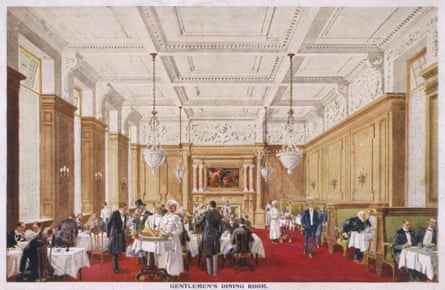
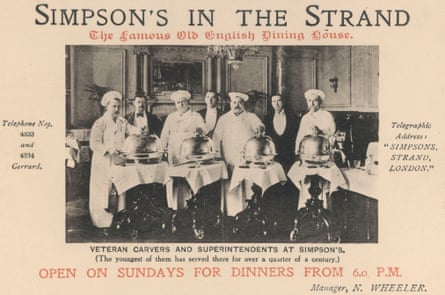
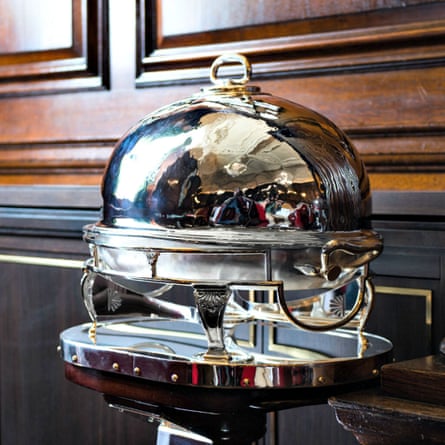
Simpson’s in the Strand was the sort of London institution where nothing changed without very good reason. Founded in 1828 as a coffee and chess club, the restaurant introduced wheeled silver trolleys so waiters could dispense roast beef and gravy without disturbing the players’ concentration, and kept them long after the chessboards had gone. In the 1860s, to emphasise its focus on British food, Simpson’s rejected the French word “menu” in favour of “bill of fare”, and so it would remain.
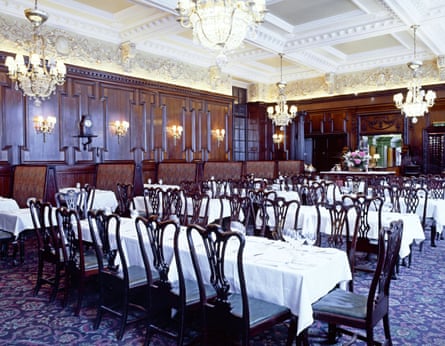
Ornate, self-consciously stately and a bit stuffy, it was as English as Charles Dickens, PG Wodehouse and Winston Churchill – all of whom, perhaps unsurprisingly, were devoted patrons. Wodehouse described Simpson’s as “a restful temple of food” where, as one of his characters observed, diners were “at liberty to eat till you were helpless, if you felt so disposed”. Not all diners, however: women were barred from the main dining room until 1984.
When Simpson’s closed in the early days of Covid, some mourned it as an emblem of the capital’s Georgian heritage – though perhaps one whose moment had passed. While other London institutions would later buzz back to life, the grande dame of the Strand remained shuttered – until now.
Next month, just in time for its bicentenary, Simpson’s in the Strand will reopen – an event that will consolidate the return of two icons of the London restaurant scene. The revival is the brainchild of the veteran restaurateur Jeremy King, who with his former business partner Chris Corbin was behind many of London’s buzziest eateries for the past five decades.
Together they revived Le Caprice in the 1980s, transforming it into a celebrity hotspot and a favourite of Diana, Princess of Wales. In the 1990s they relaunched the Ivy – nicknamed “Cool Britannia’s canteen” – where Madonna was said to have eaten sticky toffee pudding with Harold Pinter and Tom Cruise. J Sheekey, the Wolseley, the Delaunay and Brasserie Zédel were part of their celebrated Corbin & King portfolio, until fractious 2017 buyout by a Thai investment fund led to King’s ousting five years later “without so much as a goodbye”.
Four years on, King, now 70, has not lost his appetite. He has already opened two new London restaurants under his own name, the Park and the Albany – the latter on the former site of Le Caprice. Reviving Simpson’s, however, will be “the apotheosis of my career”, he has said. He fell in love with it 40 years ago has been courting its owners, the adjacent Savoy hotel, for more than 20.
Why such devotion? “I have always enjoyed the romance of historical restaurants, but as the last of the grande dame restaurants in London, Simpson’s was always going to be my heart’s desire, as it allowed us to immerse the guests in Edwardian opulence,” King said.
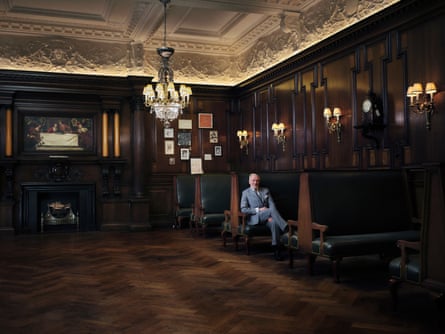
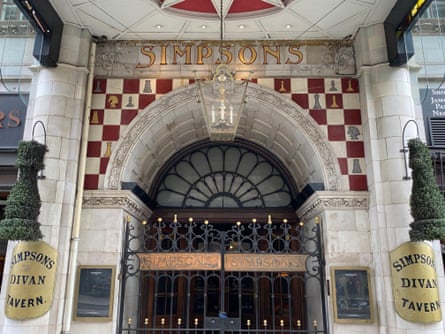
“There are very few restaurants outside of hotels that have been purpose built, and the sheer generosity of the architecture – its multiple spaces, extravagant design and sense of authority – are all so beguiling. It is unlikely that we will ever see institutions like this ever again because the excessive cost conspires against profitability.”
For the critic Jimi Famurewa, King may be the “dream custodian” for a restaurant that had “became a bit of a museum exhibit” – the sort of place to take your mother for a one-off visit at Christmas, as he did for a review in 2019, rather than somewhere Londoners would choose to go otherwise.
Not that anyone wanted to see Simpson’s disappear, says Famurewa. “There’s a lot of chatter in the restaurant world where people fret about certain businesses or buildings, and I think when it was announced that Jeremy King would be taking over Simpson’s it felt like the most perfect of match-ups.
“For all that he respects tradition and the old-fashioned, swaggeringly glamorous way of doing things, he’s somebody who is about fun and revelry.”
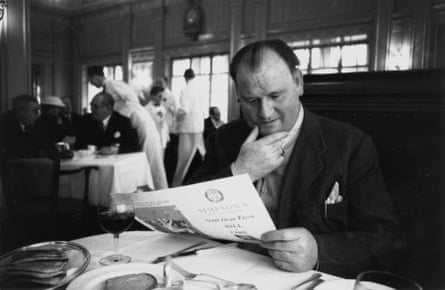
The restaurant writer Ben McCormack agrees that reinvention was long overdue. “It was one of those historic grand London dining rooms that was way past its sell-by date, and they had begun playing up the history for American tourists. And the food had become really terrible.”
Its new operator, he says, “has a real understanding of what these dining rooms mean in terms of London history, how they fit into London life. I’m sure Jeremy wouldn’t mind me saying this, but his restaurants aren’t foremost about the food, they’re about how you feel. He really puts the guest centre stage.”
King concedes that even the grandest establishments can become “spent”. He says: “It requires a great deal of determination and energy to rejuvenate and hence they sometimes change hands, the baton is passed, and they emerge either as a celebration of the history or completely changed. I am enjoying celebrating Simpson’s.”