.png) 2 months ago
27
2 months ago
27
From sizzling bowls of comforting bibimbap to crispy, hot, sweet pancakes, Korean food is exploding in popularity in the UK. Demand is rising for the country’s bold and punchy flavours, which feature soy sauce, sesame oil, the tangy, fermented kick of kimchi, raw napa cabbage and gochujang, a sweet and spicy chilli paste that elevates dips and gives an umami boost to sauces.
Last year, Waitrose reported that sales of gochujang had increased by 71% since 2024. Jamie Oliver uses it to flavour his chicken burgers while Nigella Lawson adds it to her pasta sauce. In March, Korean fried chicken was named one of Just Eat’s top 10 takeaways of 2026, while there were long queues this month at Jung, a Korean food festival in London.
Britons, it seems, can’t get enough of Korean cuisine. So, which dishes should you be seeking out – and where can you find them?
Korean fried chicken
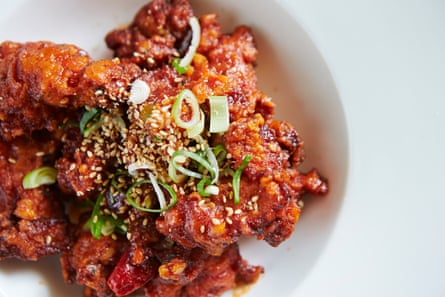
It’s the satisfying crunch that makes Korean fried chicken so addictive. Unlike American fried chicken, “the coating is very thin and it’s really crispy”, says Kyu Jeong Jeon, the co-owner of Dongnae in Bristol. She serves fried wings with a chilli seed glaze. Tapioca and rice flour are often used in the batter, she says, “so it stays very crunchy, even with sauce”.
The secret to achieving a light texture is double-frying the chicken, says Woongchul Park, the co-founder of the Michelin-starred restaurant Sollip in central London. And then there are the sauces. “Yangnyeom [made from gochujang, garlic and sugar] is very sweet and there’s a tiny bit of spiciness in there,” he says. “Soy garlic is very popular as well.” Try the signature fried chicken at Chick and Beers in New Malden, south-west London– home to the largest Korean community in the UK – or go for the half-and-half option, to try a mix of flavours, at Dopi in Bethnal Green, east London.
Bulgogi
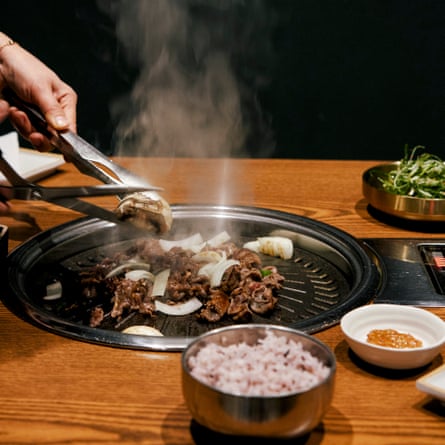
Slices of meat marinated in a delicious garlic sauce are caramelised and slightly charred alongside sliced onion to make this classic dish, which translates literally as “fire meat”. Chicken, pork and beef are common variations; Hama Korean BBQ Buffet in Leeds offers osam bulgogi (stir-fried pork with squid). “We marinate in pear and kiwi to make the meat tender,” says Park. “We use very thin slices, add a little bit of sugar and cook it on charcoal to give it flavour.” You can have a go at cooking it yourself, on a tabletop grill, at GO!K-BBQ in New Malden.
Bibimbap
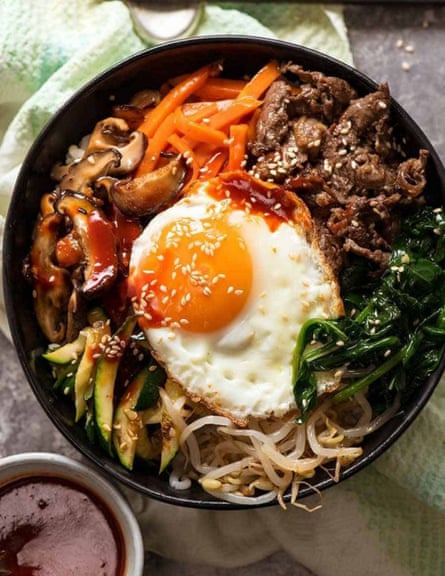
One of Korea’s most famous dishes, bibimbap is white rice served with meat – usually bulgogi beef, pork or chicken – and lots of vegetable toppings, along with a soft-fried egg. The ingredients should be mixed together with as much gochujang sauce as you can handle. Sometimes, it’s served in a hot stone bowl (called a dolsot), with the residual heat continuing to cook the rice. Seji Hong, the author of Korean Made Easy and the founder of Bombom, which sells Korean condiments, says: “You get the crunchy part of the rice at the bottom of the stone pot – Koreans love this.” Miga in east London sells sanchae bibimbap with courgette, spinach, lily flower root, beansprout and radish. If you want to try the dolsot version, head to Jin Go Gae in New Malden.
Gimbap
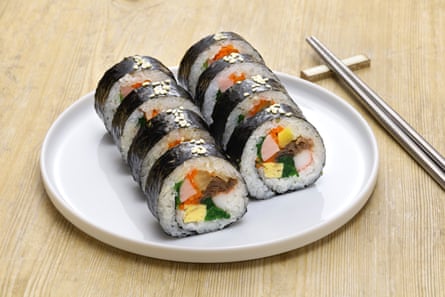
These rice rolls, stuffed with colourful vegetables, meat or seafood and wrapped in dried seaweed, resemble Japanese sushi. But the taste is totally different, says Hong: “We season the rice and vegetables with sesame oil.” (Sushi rice is seasoned with rice vinegar, sugar and salt.) Gimbap often comes with bright-yellow pickled daikon, a type of radish, which gives it a refreshing, tangy flavour. The popup Gim London sells a spicy fishcake gim roll, while Sarangbang in Nottingham has a vegan option with tofu.
Jeon
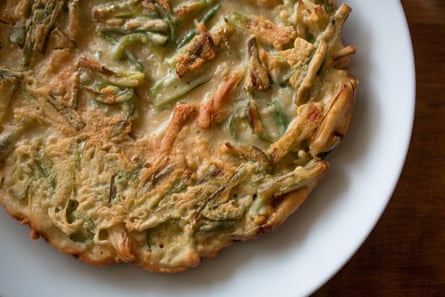
Korean pancakes, made with an assortment of ingredients that can include kimchi and vegetables, are pan-fried until crispy and golden. The most popular variation is seafood (haemul pajeon), which tends to feature spring onion, prawn, squid and mussels. On rainy days in Korea, Park says, people like to order “jeon with soju [a distilled vodka-style spirit], I think because it’s greasy and crispy”. Kim’s Mini Meals in Edinburgh serves gamja jeon, with potato and chilli. At Seoul Bakery in central London, you can add beef or sausage as an extra topping for any of the savoury pancakes.
Kimchi jjigae
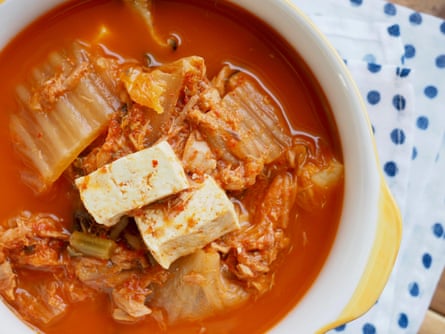
There are many types of jjigae – stews – in Korean cooking, but this kimchi-laced one is the classic. Silky-soft tofu, kimchi and pork are simmered in a rich, bright red stock. The taste is bold and sour. “For me, it’s one of the most comforting Korean dishes,” says Jeon. “It’s better when you use really well-fermented kimchi in the soup, so the flavour is deep and complex.” Hong adds: “An anchovy broth is the classic kimchi stew flavour.” The dish is finished off with a scattering of spring onion. Head to Soju in Brighton or Imone BBQ in New Malden for a warming bowl with a mildly spicy kick.
Budae jjigae
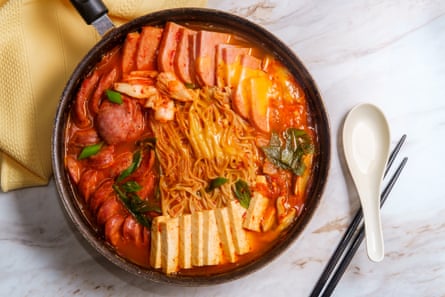
Also known as army-base stew, budae jjigae is a fun fusion of Korean and American cuisine. “This dish came after the Korean war,” says Jeon. “People used ingredients the US army base donated, like Spam, sausages and baked beans. This dish is very joyful, because you put instant noodles and cheese on top.” All these ingredients, as well as rice cakes and kimchi, are mixed into a broth flavoured with gochujang and gochugaru (red pepper flakes). And even though it comes with ramen, you eat it with rice, too. “I like it, but it’s a guilty pleasure,” says Park. Assa in central London and Koreana in Manchester serve giant, hearty pots that are meant to be shared.
Mandu
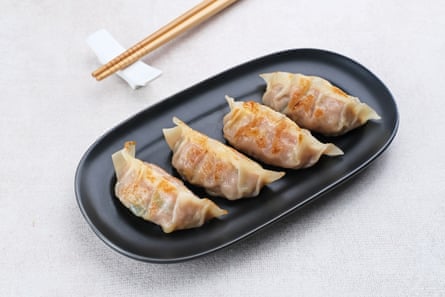
These plump, juicy dumplings are filled with a variety of ingredients such as kimchi, tofu and sweet-potato glass noodles. They’re usually steamed, but can also be boiled (mul mandu), fried (gun mandu) or served in soup (mandu guk). “The main difference between mandu and Chinese dumplings is the thickness of the skin,” says Park. “Korean mandu is thinner.” Japchae (stir-fried vegetables and glass noodles) is a popular filling and available from Han Sik in Hyde, near Manchester. Space Jaru in Dublin has beef and tofu options.
Tteokbokki
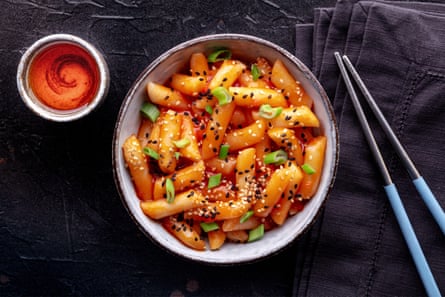
You’ll find tteokbokki, chewy rice cakes slathered in a rich gochujang sauce, at street stalls across Korea. They come with boiled egg, salty fish cakes and spring onion. “Korean people love the chewy texture,” says Hong. “Seven years ago, when I had a Korean supper club in London, I cooked tteokbokki but, at the time, [British people] didn’t like it because of the texture. Nowadays, they love it.” Jeon adds: “It’s spicy and sweet and the gochujang sauce is incredibly addictive – it is very filling as well.” Try it at Moiim in Liverpool or Angel Dabang in north London, which offers various toppings including gimmari (deep-fried seaweed rolls filled with silky glass noodles).
Hotteok
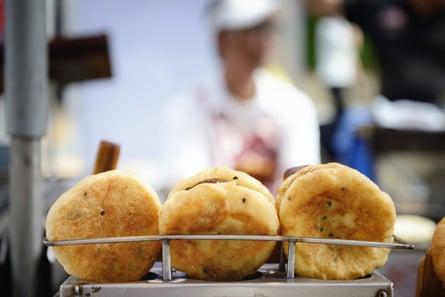
Another popular street food is hotteok, pancakes stuffed with sweet or savoury fillings, traditionally cooked on a griddle. The standard version, called ssiat, “is really crispy outside, but the inside is molten brown sugar with [cinnamon], nuts or sesame seeds”, says Jeon. “It’s really simple, but just so good.” Finish off your meal with the sweet version at Oh My Kimchi in Exeter or grab one to go at HoHo in east London, which has a sugary vegan version, as well as Nutella and bulgogi beef options. Make sure to wolf them down hot, for maximum crunch.